Marina Lyubimova
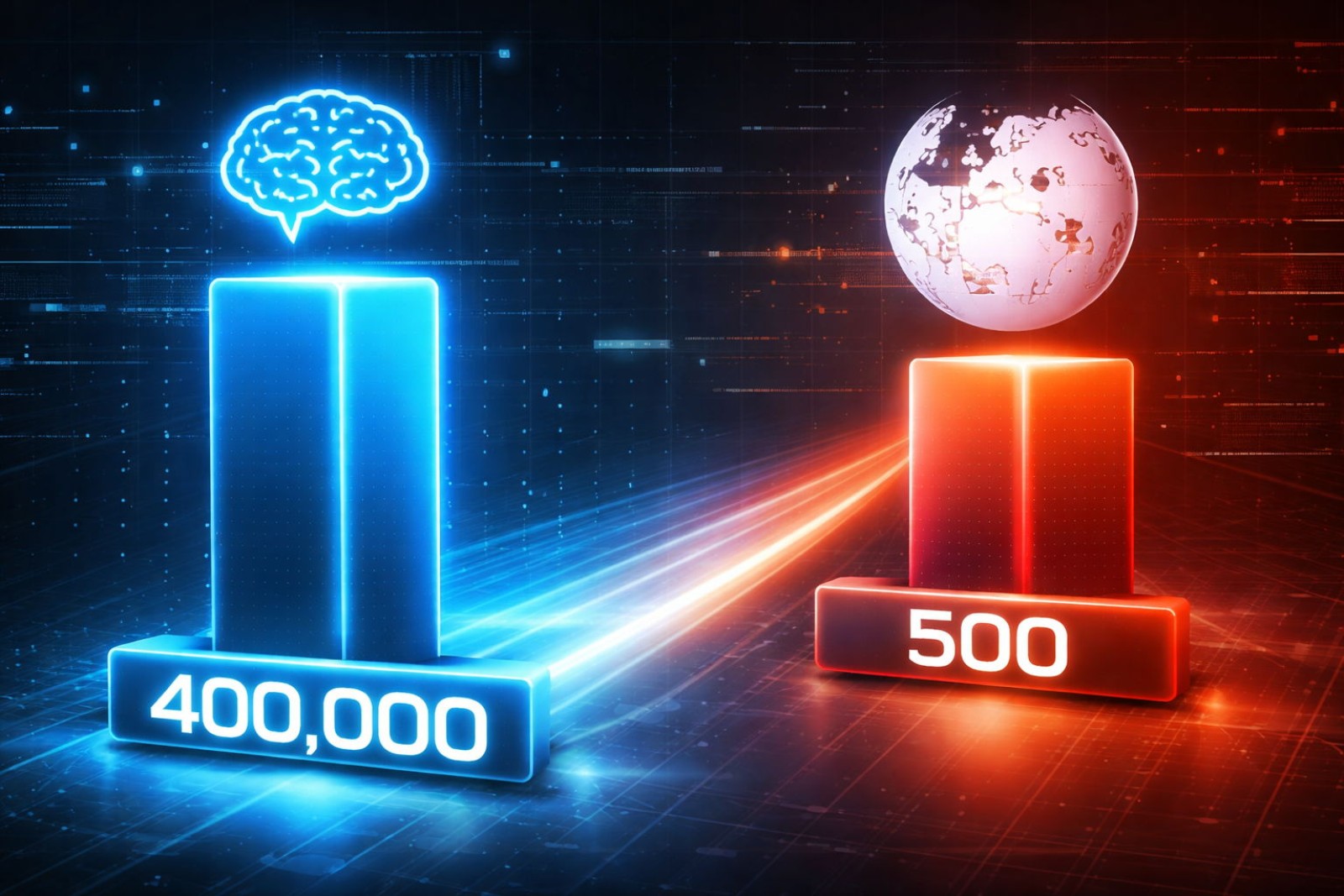
⬤ Grokipedia has grabbed attention after a visual comparison exposed the massive gap between its content production and Wikipedia's. The numbers are staggering: Grokipedia cranks out approximately 400,000 articles per day, meaning it added over 4 million new articles in just the past 10 days. Meanwhile, Wikipedia adds roughly 500 articles daily—about 15,000 per month. This stark difference shows just how fast AI-based systems are transforming large-scale knowledge creation.
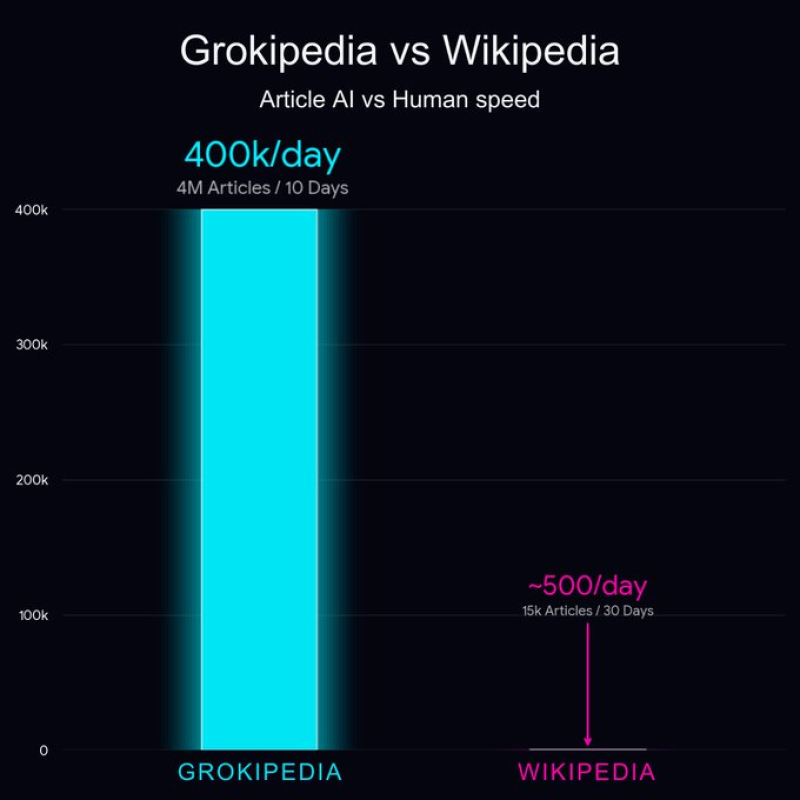
⬤ The chart labels the comparison as "Article AI vs Human speed," putting automation front and center. Grokipedia's daily output dominates the visual as a massive bar, while Wikipedia's contribution barely registers in comparison. This isn't just a small gap—it's an orders-of-magnitude difference between AI-generated and human-curated publishing models.
⬤ At this pace, Grokipedia creates in days what would take years through traditional methods. The platform is scaling rapidly while continuously evolving, with references to building an "Encyclopedia Galactica"—essentially a near-real-time, comprehensive map of human knowledge. The comparison focuses purely on production speed and volume, without addressing editorial oversight or content validation processes.
⬤ This matters because it shows how AI is fundamentally changing what's possible in knowledge publishing. The widening gap between AI-driven platforms and human-edited models raises important questions about the future of information ecosystems. As automated knowledge systems continue expanding at this rate, they'll likely reshape how people discover, consume, and interact with information across education, research, and digital media.
 Marina Lyubimova