Eseandre Mordi

⬤ OpenAI sent a formal warning to the U.S. House Select Committee on Strategic Competition, raising concerns about Chinese actors distilling its AI models to build competing systems. The February 12, 2026 letter outlined how foreign competitors are reverse-engineering OpenAI's technology to advance their own artificial intelligence capabilities, as Mario Nawfal reported.
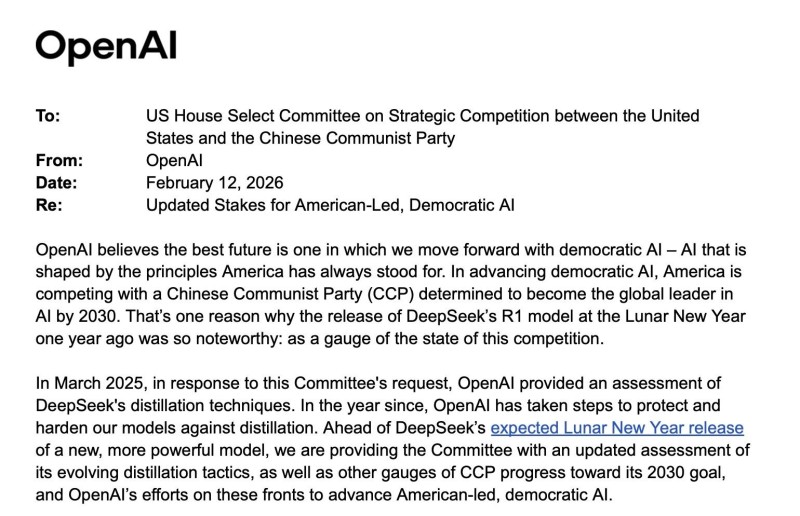
⬤ The company specifically cited DeepSeek's R1 model release as proof of China's accelerating progress in the global AI race. OpenAI told lawmakers it expects additional model developments around the Lunar New Year period, signaling intensifying competition in advanced AI research.
⬤ OpenAI has spent the past year hardening its systems against distillation techniques—methods that allow competitors to extract knowledge from AI models without direct access to training data. The company provided Congress with updated intelligence on evolving tactics being used to bypass these protections.
"Chinese actors are distilling OpenAI models and using the techniques to advance competing AI systems".
⬤ The warning connects to China's stated goal of becoming the global AI leader by 2030, a timeline that U.S. policymakers increasingly view as a strategic threat. OpenAI's communication places AI development squarely within national security discussions, highlighting how technological competition now intersects with government oversight and international policy.
⬤ The letter signals growing recognition that AI advancement has moved beyond corporate competition into geopolitical territory. As Chinese companies demonstrate rapid progress through model distillation and other techniques, American AI leaders are turning to Congress for regulatory frameworks that could protect technological advantages while maintaining innovation momentum.
 Eseandre Mordi