Usman Salis
⬤ Artificial intelligence has been used to create an upgraded anti-inflammatory protein that performed significantly better in early testing. Researchers used AI modeling and molecular simulations to engineer new versions of the IL-1 receptor antagonist—a protein that blocks inflammatory signals. In animal tests, the top AI-designed variant showed up to 53% more anti-inflammatory power compared to Anakinra, the currently approved biologic drug.
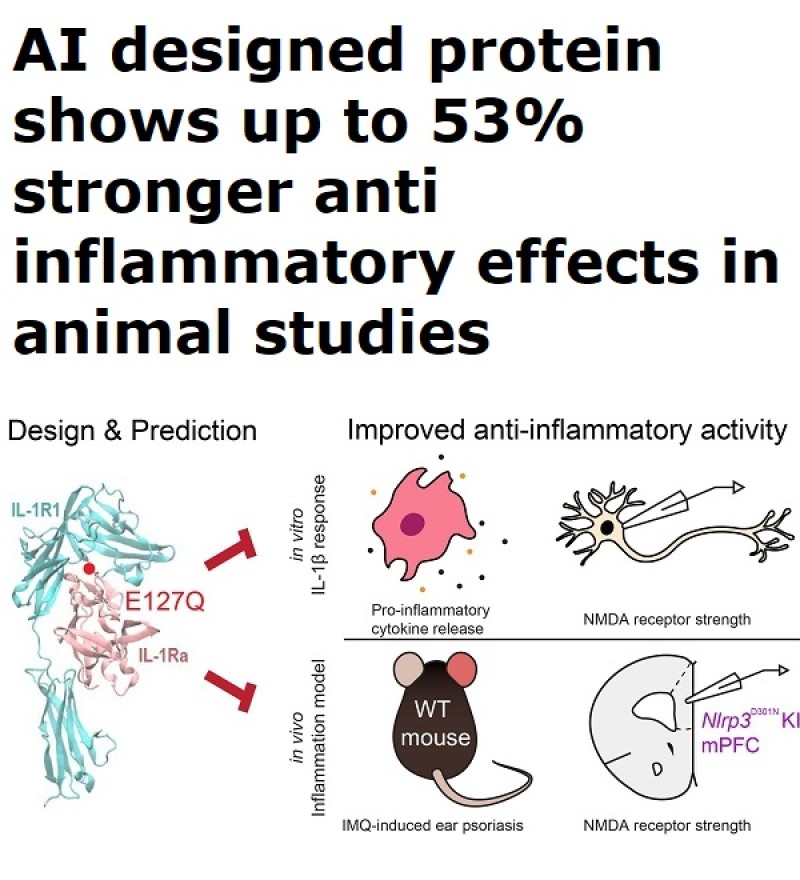
⬤ The AI process produced modified IL-1 receptor antagonist proteins that grip the IL-1 receptor (IL-1R1) more tightly, which helps the protein shut down inflammatory pathways more effectively. Lab testing showed the engineered variant reduced pro-inflammatory signaling better than the standard therapy. Results from animal models revealed the protein could meaningfully reduce inflammatory responses and even reverse neuroinflammatory activity, suggesting potential for better treatment outcomes across various inflammatory diseases.
⬤ The findings show how AI-based protein design can improve existing biologics by strengthening binding and therapeutic response rather than creating completely new molecular targets. The work is still in pre-clinical stages, so more research is needed to confirm safety, prove effectiveness in humans, and navigate regulatory approval. The bigger picture here is that AI-driven engineering could eventually transform how many established therapies are enhanced or redesigned.
⬤ This matters because AI-enabled drug discovery and biologic optimization are rapidly advancing fields in biotech. More precise protein-engineering tools could speed up development timelines, boost the effectiveness of existing treatments, and expand the range of conditions treatable with biologic medicines. As AI capabilities keep improving, computational design is expected to play an increasingly important role in the biopharmaceutical industry.
 Usman Salis