Alex Dudov

⬤ ChatGPT has taken a notable hit in recent weeks compared to Google's Gemini. The numbers tell the story: ChatGPT's seven-day average dropped from about 203 million visitors to around 158 million over the past six weeks—a 22% slide. This happened right around the time Gemini 3 launched, while Gemini's traffic stayed relatively flat during that same stretch.
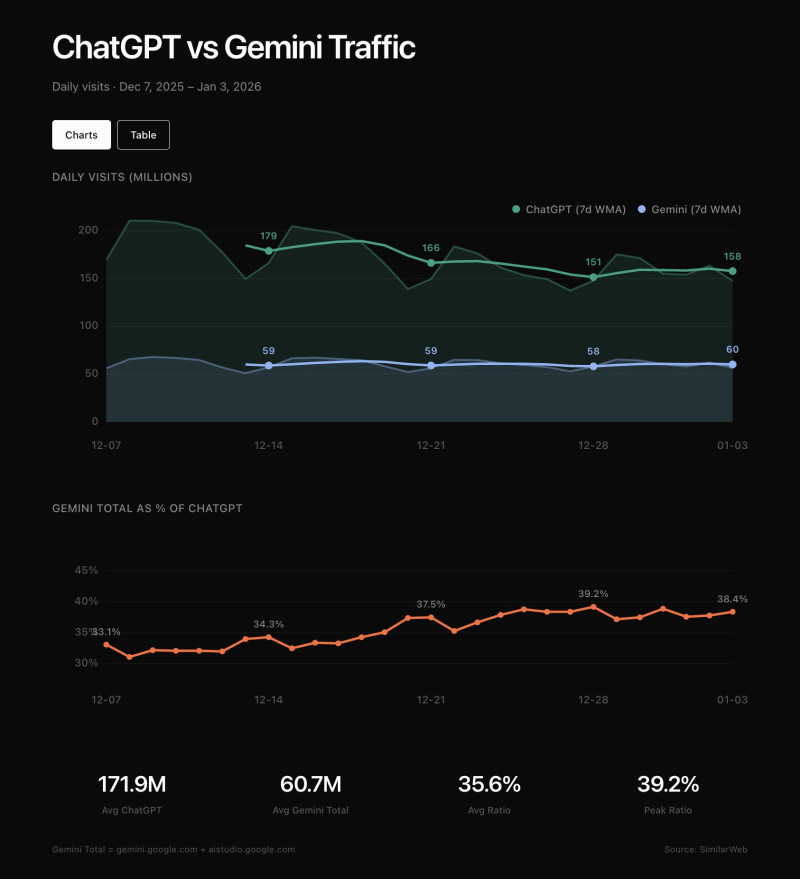
⬤ Gemini now sits at roughly 40% of ChatGPT's traffic levels. Looking at the broader picture, ChatGPT averaged 171.9 million daily visits during this period, while Gemini pulled in 60.7 million per day. That puts Gemini at 35.6% of ChatGPT's traffic on average, with the gap narrowing to 39.2% at its tightest point. Gemini held steady around 59–60 million daily visits, while ChatGPT bounced around more dramatically before settling near 158 million in early January.
⬤ The traffic ratio has been trending in Gemini's favor through December and into January. At the start of this period, Gemini was pulling about one-third of ChatGPT's traffic, then gradually climbed into the high-30% range. ChatGPT still dominates in raw numbers, but Gemini keeps chipping away at that lead. In the AI assistant world, traffic trends like these are a key indicator of user engagement and which platforms are gaining real traction.

⬤ For Alphabet's Google (NASDAQ: GOOGL), Gemini's consistent performance shows it's carving out serious space in the consumer AI market. OpenAI's ChatGPT still holds the crown for total scale, but the recent 22% drop highlights how new launches and seasonal shifts can shake up user behavior. The shifting balance between these two platforms could reshape expectations around user loyalty, retention, and where the competitive lines get drawn in the broader AI landscape.
 Alex Dudov