Peter Smith

⬤ Alphabet Inc. (GOOGL) stands out as one of the few tech giants controlling all four critical layers of artificial intelligence: silicon hardware, data center infrastructure, foundation models, and consumer applications. This vertical integration lets Google optimize performance across its entire system while cutting dependence on outside suppliers. The company's presence spans TPU chips, Google Cloud infrastructure, Gemini AI models, and massive platforms like Search and Android—a breadth most rivals can't match.
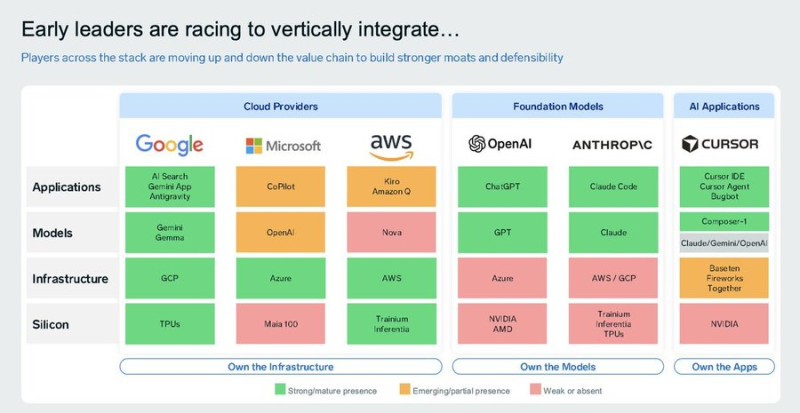
⬤ Owning the full stack delivers concrete advantages: lower cost per AI task, faster rollout cycles, and fewer supply chain vulnerabilities. As one analyst noted, "The missing layer in any company's AI stack becomes a dependency that can erode margins or introduce strategic risk." While OpenAI and Anthropic excel at models and apps but lean on external cloud capacity, and Microsoft dominates distribution but depends on OpenAI for model development, Google operates independently across the board. Amazon Web Services is building silicon and infrastructure strength but still expanding its model and application layers.
⬤ The shift matters because competitive advantage in AI is moving beyond "who has the best model" toward "who controls the most supply chain pieces." Companies owning more components can make AI cheaper, faster, and more scalable. For GOOGL, this structural position could translate into better operating leverage and stronger competitive moats as AI becomes central to every product line. When supply tightens or pricing shifts hit external partners, vertically integrated players face less exposure to margin pressure and strategic bottlenecks.
 Peter Smith